The Scrambler / Twist
Three principal arms rotate around a central spindle while sub-clusters of four carriages rotate in the opposite direction. This double-planetary motion pushes riders through alternating gentle arcs and intense outward sweeps.
Great amusement parks are not built on record drops alone. Multi-generational attractions anchor a park's collective memory, offering accessible thrills that grandparents and young children can share side-by-side.
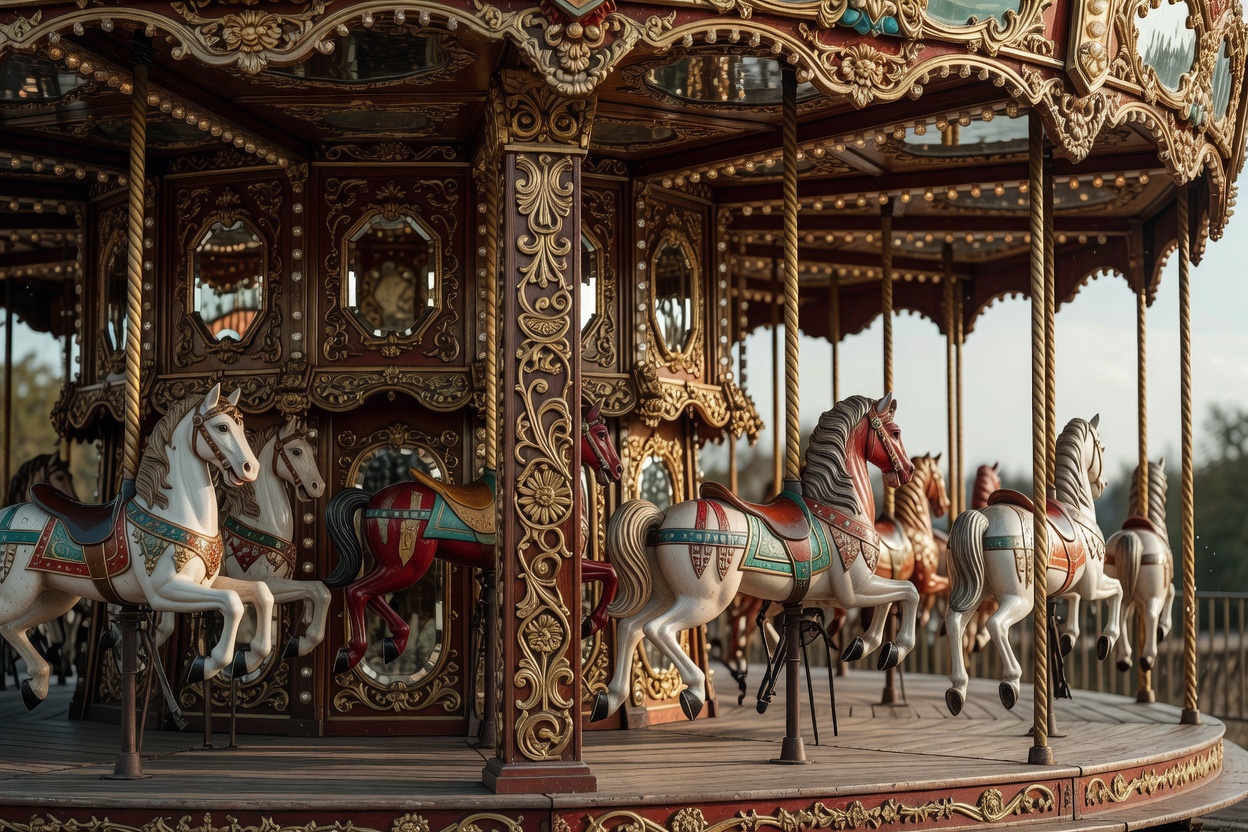
Between 1880 and 1930, master woodcarvers from the Philadelphia Toboggan Company (PTC), Dentzel Carousel Company, and Marcus Illions shaped thousands of basswood and poplar horses:
Introduced in its modern form by Arrow Development in 1963 at Six Flags Over Texas (El Aserradero), the log flume remains an engineering staple. Flumes move high passenger volumes with minimal track maintenance using simple water troughs.
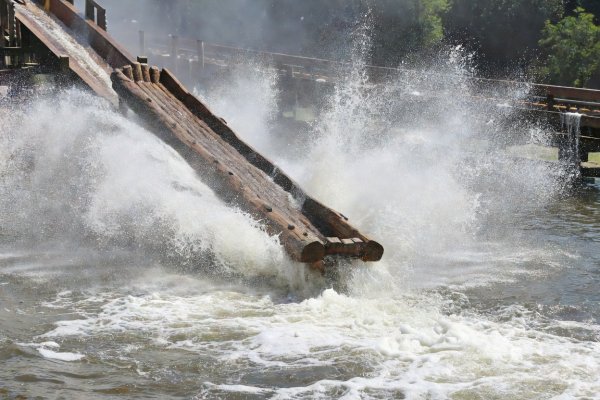
Massive turbine pumps circulate thousands of gallons of water per minute along concrete or fibreglass flumes sloped at a subtle 1:1000 grade. At the crest of final drops, vehicles engage anti-friction rails before plummeting into run-out troughs. Water resistance slows the boat smoothly, producing the signature plume of cooling spray that delights onlookers as much as riders.
Centrifugal and planetary motion provide immediate thrills without immense footprint requirements.
Three principal arms rotate around a central spindle while sub-clusters of four carriages rotate in the opposite direction. This double-planetary motion pushes riders through alternating gentle arcs and intense outward sweeps.
Dating to early 20th-century German fairground engineers such as Zierer, suspended chair flights tilt as they rotate. Centrifugal force lifts riders into horizontal flight, giving a buoyant sensation of gliding through tree branches.
Modern family dark rides utilize automated guided vehicles navigating via local Wi-Fi, optical grid cameras in the floor, and sub-surface RFID tags. Without fixed metal rails, vehicles can spin, reverse, and cross paths dynamically.
Unlike modern computerized rides, vintage flat rides rely on tactile pneumatic hand valves, friction clutches, and heavy mechanical counterweights. Organizations such as the National Carousel Association (NCA) document and preserve these historic hand-crafted works across parks worldwide, ensuring the physical craftsmanship of the 19th and early 20th centuries survives for future visitors.